Let’s talk about the essential processes for businesses.
If your business feels like a game of whack-a-mole, you’re not alone. Most entrepreneurs don’t struggle with finding clients—they struggle with systems. When your brain is juggling emails, deadlines, and client requests with no structure, burnout isn’t an “if.” It’s a “when.”
I’ve been running my own business since 2016. But I’ve loved organizing and streamlining since I was a kid labeling my friend’s closet. (Yes, I was that person with a label maker for fun.)
Now I help founders put processes in place that make their work run smooth—not to-do lists on fire.
Here’s the truth: even if you don’t think you have a process, you do. It might be messy or stuck in your head, but it exists. The key is making it repeatable. That’s where these essential processes for businesses come in.
When clients have a seamless experience, they tell their friends. And that means more referrals, more dream clients, and less hustle on your part.
CRM tools like HoneyBook, Dubsado, or Aisle Planner can make this easier. They automate tasks, keep details organized, and free you to focus on serving clients.
Not sure which CRM fits you best? Read our post: Choosing the Right CRM for Your Business.
Disclaimer: I may earn a small commission when you use my coupon code/link to any products or services from this website. I care about integrity, so you should know I only offer affiliate links for resources/programs I’ve personally used and loved in my business and my clients’ businesses. Please only buy what you need, but rest assured knowing your support helps keep this content flowing!
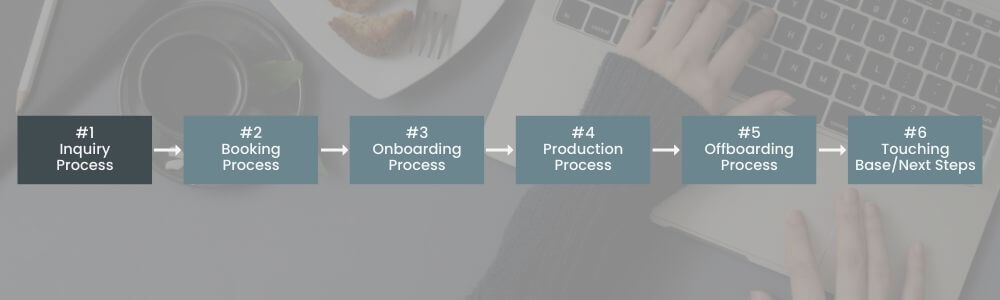
#1 – Inquiry Process
First impressions matters.
The inquiry process is when a lead raises their hand and says, “Tell me more.” This is where trust begins.
What it should include:
- A fast, professional reply
- An email signature with your info
- Clear answers to questions
- Next steps, like booking a cal
- A touch of personality
Leads become clients when you reply quickly and guide them forward.
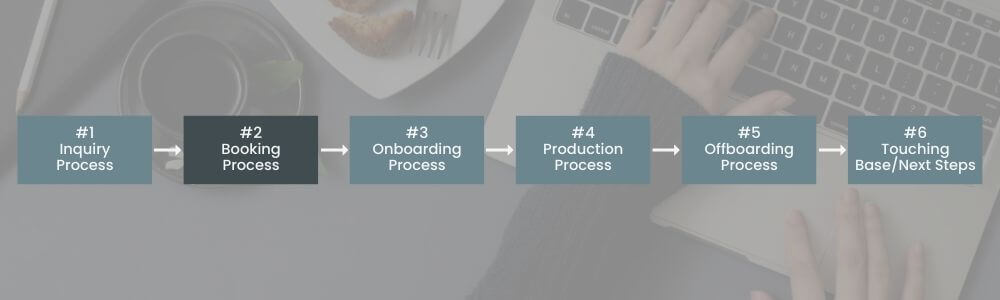
#2 – Booking Process
Your lead is ready to commit. Don’t make it complicated.
Once someone says “I’m in,” the path to becoming a client should be seamless with no confusion, waiting, or chasing down paperwork.
What it should include:
- A proposal with services and pricing
(Don’t have one yet? Check out this post with the Components of a Rock-Solid Proposal) - A clear, legally-sound contract
(Don’t have one or not sure what you need? Check out the Must Have Contracts Every Small Business Needs.) - An invoice with payment details
- Info on how long the proposal is valid
- Clear next steps after payment
Smoother booking builds confidence. Keep it easy.
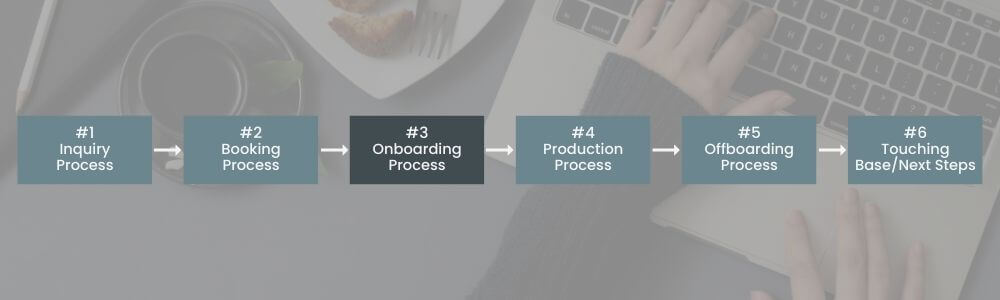
#3 – Onboarding Process
They’ve booked—now make it official.
Your onboarding process bridges “yes” to “let’s get started.” This is your chance to make your client feel like they just made the best decision ever.
It’s also your moment to set boundaries, clarify communication, and give them a heads-up on what’s next.
What it should include:
- A celebratory “You’re booked!” email
- A boundaries + expectations doc (customized for their project).
- Homework, forms, or prep tools
- Project start dates on your calendar
Smooth onboarding sets the tone for the whole project.
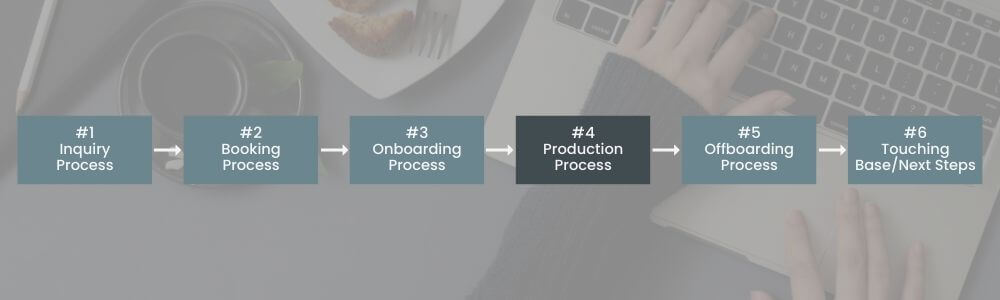
#4 – Production Process
This is where you deliver.
Now it’s time to serve. This process should feel intentional, structured, and on-brand. Clear communication and strong timelines are everything here.
What it should include:
- Regular client updates
- Clear milestones and deliverables
- Space for revisions
- Transparency about next steps
Clarity here = confidence for your clients.
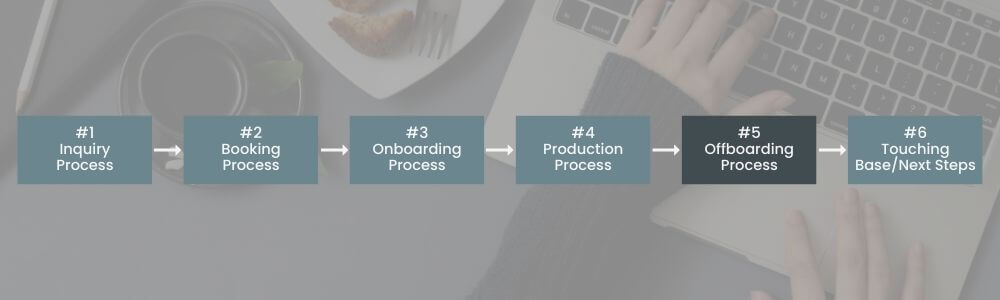
#5 – Offboarding Process
End strong.
The offboarding process is the (metaphorical) goodbye kiss to your clients. Too many businesses skip this step. Offboarding is how you wrap things up, gather feedback, and invite future work.
What it should include:
- A final recap email
- Confirmation that services are complete
- Final payment (if needed)
- A feedback or testimonial request
- Resources or next-step offers
This turns a good project into a lasting relationship.
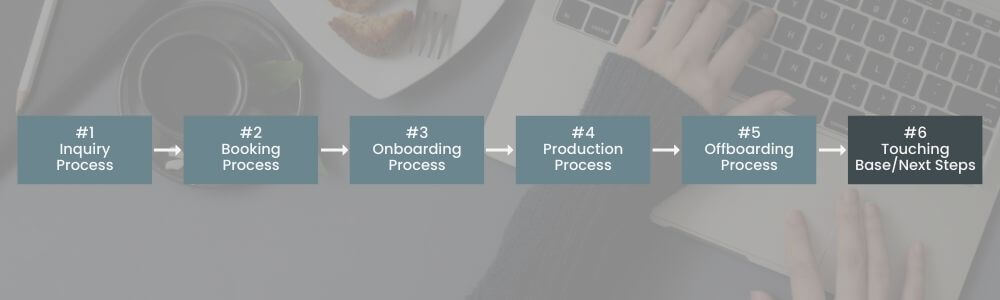
#6 – Touching Base Process
Stay connected and top of mind.
A well-timed follow-up can build long-term relationships and keep referrals flowing.
What it should include:
- A personal check-in
- Helpful updates or resources
- An easy referral option
Clients may finish a project, but they don’t have to forget you.
Final Takeaway
These six essential processes for businesses form the backbone of smooth operations. Start with the one causing the most stress and build from there.
Want to automate the chaos and create raving fans? Check out how we can help.
You’re not just building a business. You’re building a legacy. Let’s put systems in place to match that.
Pin this to read later!